-
Boys and froggs. Weep or Laugh?
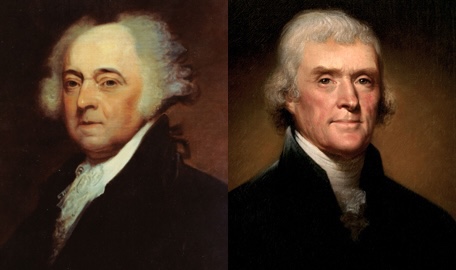
John, Adams, Thomas, Jefferson 15 November 1813, Adams to Jefferson: “You very justly indulge a little merriment upon this Solemn Subject of Aristocracy. I often laugh at it too, for there is nothing in this laughable world more ridiculous than the management of it by almost all the nations of the World Earth. But while We Smile, Mankind have reason to Say to Us, as the froggs Said to the Boys, What is Sport to you, is Wounds and death to Us. When I consider the weakness, the folly, the Pride, the Vanity, the Selfishness, the Artifice, the low craft and mean Cunning the want of Principle, the Avarice the unbounded Ambition, the unfeeling Cruelty of a majority of those (in all Nations) who are allowed an Aristocratical influence; and on the other hand, the Stupidity with which the more numerous multitude, not only become their Dupes, but even love to be taken in by their Tricks: I feel a Stronger disposition to weep at their destiny, than to laugh at their Folly.”
-
Untraumatic “History”
What great traumas – and realities of life and world– of history are ignorable because unknown in the blithestyle of the American “middle class”?
-
Unquestioned Faith
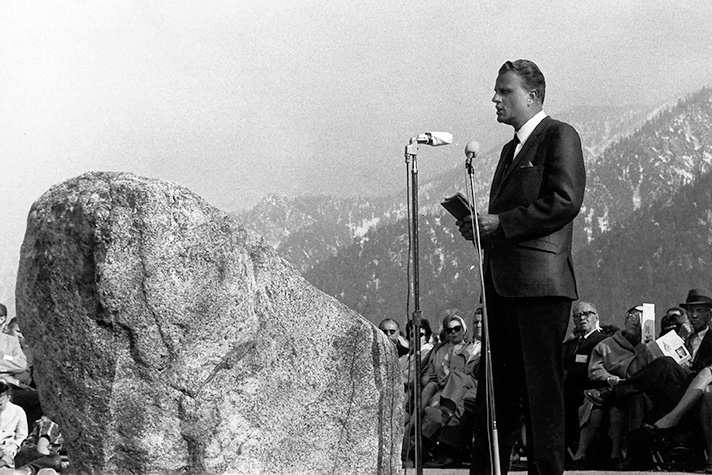
In a time of life crisis, at a moment of life choice, Billy Graham chose to avoid — to ignore — centuries of intellect and thought, and to turn all of the substance of human history into a moment of religious repentance. And millions worldwide followed.
-
Politics as Wars of Religion…
Except that honesty is not required.

-
Far and near
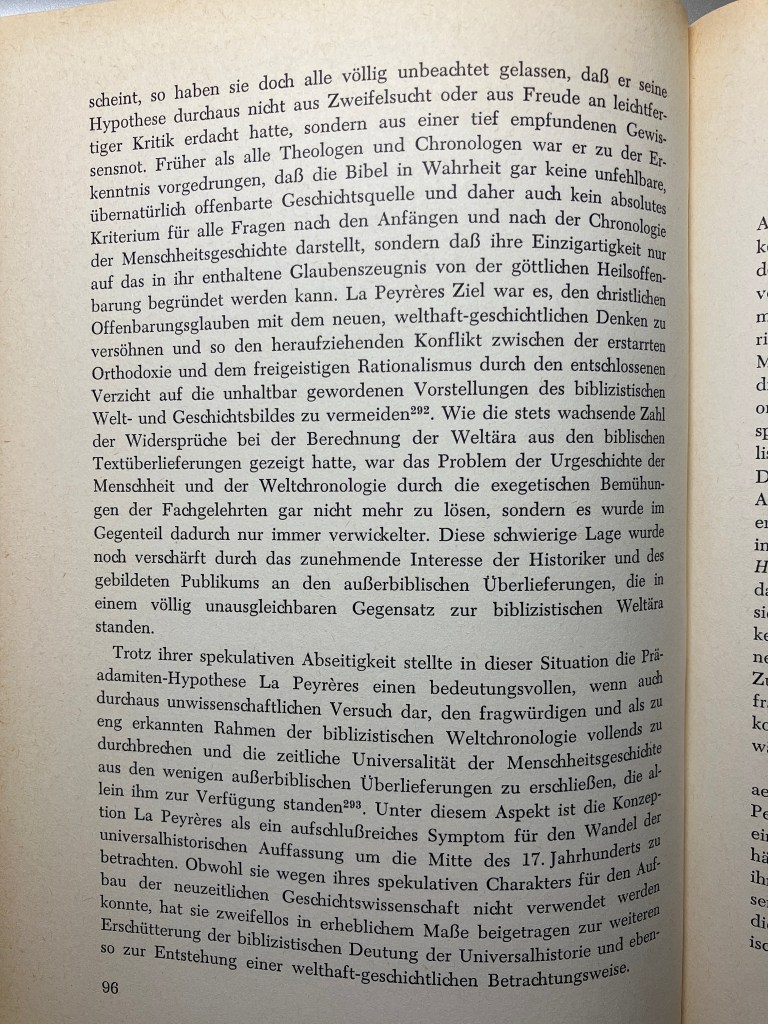
Sometimes one must study facts far distant miles of years away, in order to understand where one stands.
-
A fool on a hill

Exiting,… consciously extracting one’s self from the unconscious traditions of thought and belief, in which most will temain unawares asleep, adreaming, leaves one standing rather solitarily on a hill. As if by one’s own effort of mind, the remaining surrounding fog, mist and clouds are dispelled.
And such inner acts are fully hidden from those below the clouds in the valleys.
-
After Nietzsche?
It is probably impossible to be a knowledgeable – certainly if one is educated – serious thinker, and not have gone through at least a bath of Nietzsche..
-
Ahistoria
Ahstoria is less an ignorance of history than a state of mind, of being. Perhaps non-being. Certainly unconsciously being. For the ideas in which we live and move and have our being have their own story in which we “are”, but not knowing it at all, or even recognizing it, people live in an ahistoric state.of mind. A state of mind which is like a condition of being.
And I continue after decades to extract my mind, my self, my being from this condition of mass ahistoria.
The fact is is that most people do not live inside of history, they live in their houses. Better stated: they are not aware that they live in history, though they do; but they are aware that they live in their houses.
-
Overtime
A compilation of communications to the future by those who felt outside and over their times, and especially the idea of such individuals being outside, above, “over” their time consciously, and aware that others in history also could also have been outside and above their times, and that they might be aware of the others in history being outside and above their time and keeping them in mind. And especially those in the past or future who were aware that they were outside of their times, and that there were others who would’ve thought of others being outside and above their times.
-
Useless insights
Seeking decades for answers most do not know have questions.
-
Subscribe
Subscribed
Already have a WordPress.com account? Log in now.
 Stephen Lapeyrouse . . . Notes Dropped Along the Way