-
Departmentals
The world is one, and all specializations and departments of thought can only argue or comprehend, no matter what they pretend or imagine, parts of it.
-
Down to the evil core?
No writing, be it history, literature, social critique, utopian speculations, or other can be held complete, even if only in intention, unless and until it at least in fundamental insight includes, or at least attempts to “comes to grips with”, E/evil in man and history.
-
Boomer Ahistoria
Baby boomers in America were raised in a massively popular ahistoria of the realities of then-recent world politics, dictatorial regimes, social psychologies, war, and life elsewheres for many years thenafter.
Prosperity in the suburbs, and their social psychologies and lifestyles, provided a substitute for worldviews, knowledge of the potentials for good and evil individually and collectively of mankind, and postwar realities lived contemporaneously but separated by geographies and histories.
Rarely has this ahistoria been subsequently informed by knowledge of even the basic facts of 20th century history.
For instance, recently, in conversation with a rather successful “businessman” – one who had studied at an ivy league school in the 70’s – it was necessary to inform him that his birth year was eight years after World War II ended.
But for most, getting-by, perhaps succeeding and enjoying life – Jeffersons worldly “pursuit of happiness” – was a substitute for a world-view and -knowledge they rarely realized that they did not have.
-
Bechurched
From birth to death, from baptismal to burial services, those who never thought outside their church…
-
Facts or paths
Scientific objective facts contra established inner knowledge of paths.
-
Psychology amd Ontology of Lit – 101
Attempting to understand life and world and mankind through literature, is like trying to study the world via a mirror. Or trying to study the actors on a stage playing reality.
Perhaps this is a post-grad seminar?
-
Books as guides…
Books as maps, telescopes, microscopes, binoculars,… guides to the World
For more than four decades necessarily approaching the World via books…
After more than four decades realizing books must be made companions, not the guides.

-
Mass ahistoria
Most humans, be they “leaders” or the lead, are so engulfed in their present time, that they do not learn the lessons from history, during which humans were engulfed in their present times.
-
And eye for an eye?
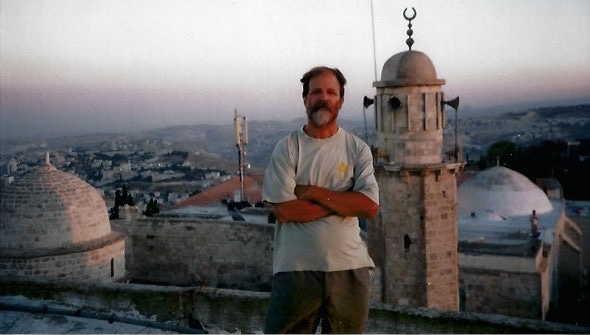
Israel-Hamas War: Revenge is two-hundred eyes for an eye..
The one and only solution there was, is, and will be the “two-state solution”.
-
“Heaven on earth”?”
There is here an inherited assumption that life on earth is the main scene of meaning.
-
Subscribe
Subscribed
Already have a WordPress.com account? Log in now.
 Stephen Lapeyrouse . . . Notes Dropped Along the Way