Turns out the anthopops, on good basis for their world- and history-view: Steiner himself, mythologize Kalot-Bellota.
In Sciacca I was able to get €100 without any charge at all. Not like in Rome or Naples, or other places where they charge 13% interest.
I think I’ll start saying I’m from California rather than North Carolina, the reaction is bigger
The music on the bus from Sciacca to Agrigento is of the same style as you could hear these days anywhere in the world. Only with Italian words.
I heard the identical sound of music in Yucatán. Where is difference in the world these days?
Most people have absolutely no idea what “Charles” means when they said
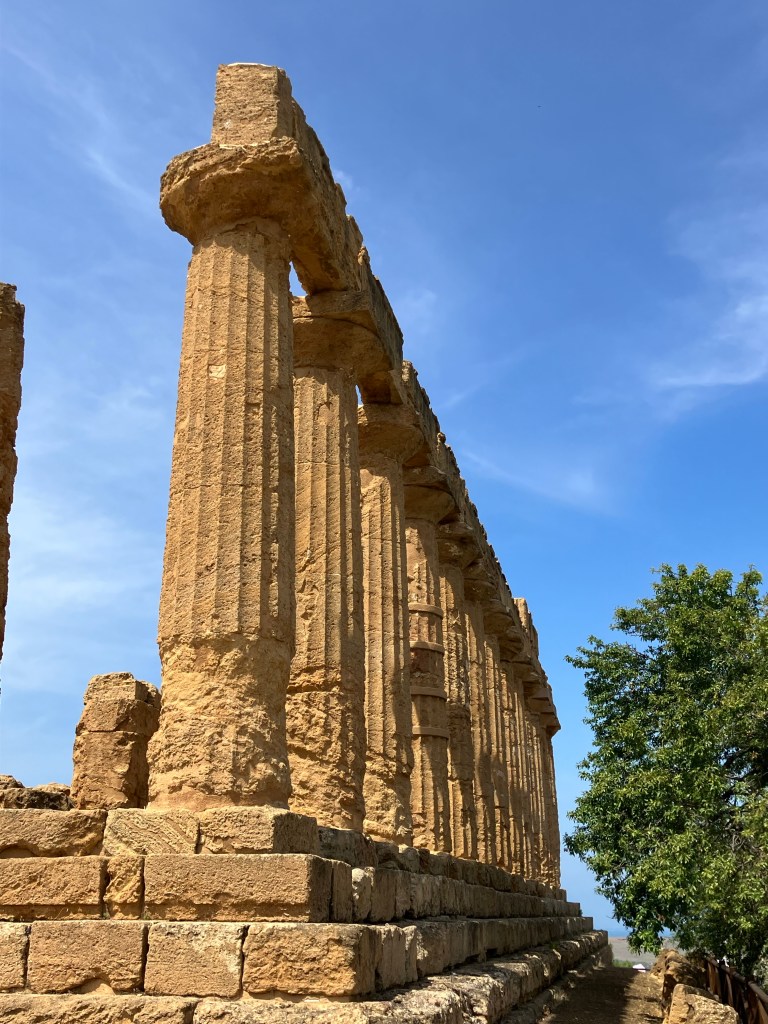
For me, as usual, it is not the temples, not the stones, however, beautifully carved, but the ideas by which men and women lived in those times.
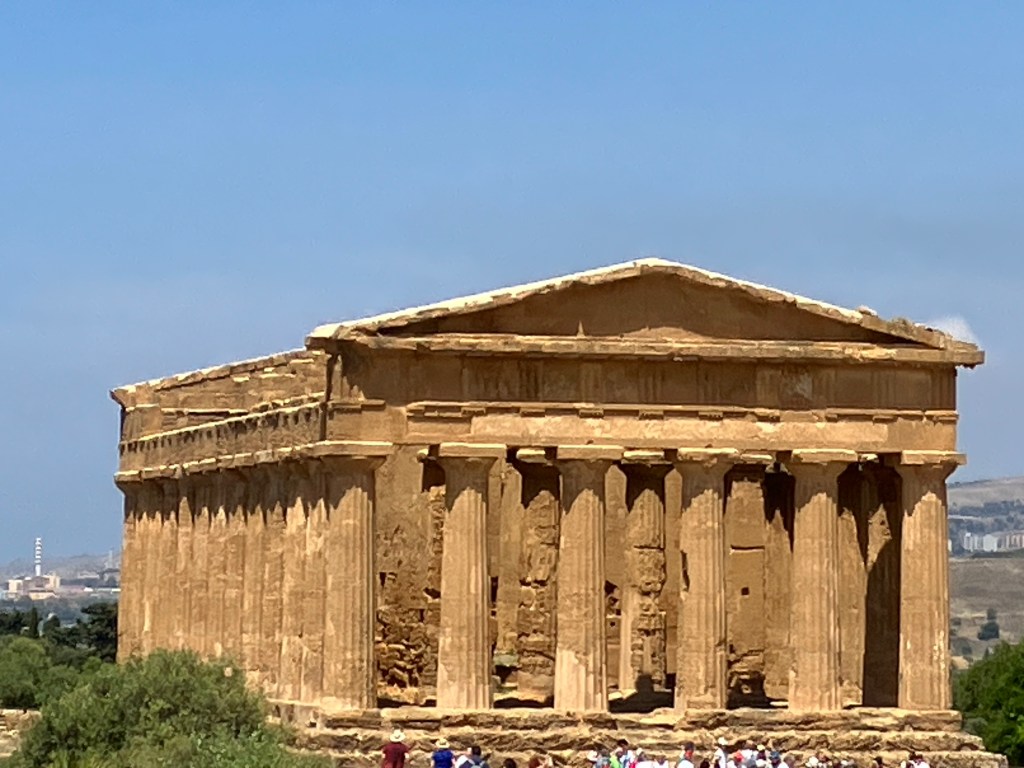
Is there some kind of physical inevitability to this structure, or how much of it is “aesthetics” as we would later call it?.
But what can we now gain from this?
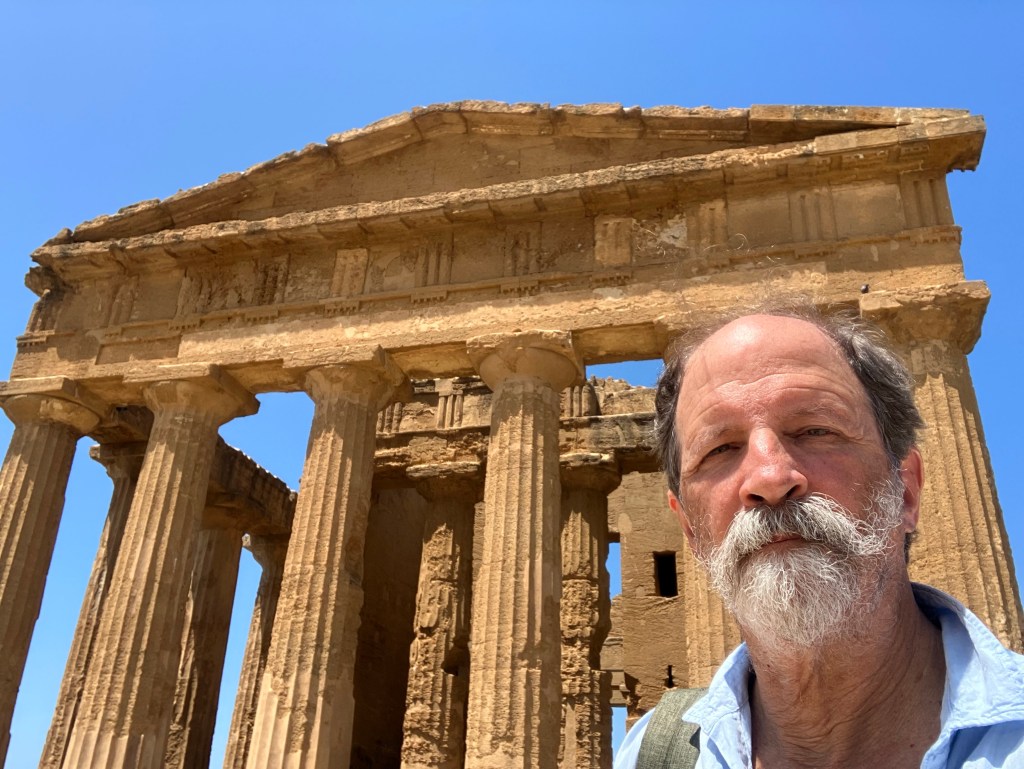
I can not help but recognize American politics as the stirring of herds.
A deep outbreath, when leaving the temple of Zeus Olympus in Agrigento, indicates to me the conclusion of my Italian journey.
Certainly, the Ontos of ruins is much less than our imaginations would find.
Goethe’s Faust engaged the doctorate; Hesse’s Steppenwolf the bourgeoisie.
A more dramatic place than where I now stand, atop the peak at Caltabellotta, I have only a few times experienced. This time, as I predicted, completely alone — for the sunset and full moon rise. June 3, 2023, approx. 8pm.
Question: When did Caltabellotta, even with its Arab name, begin to be considered some sort of center of malevolence, evil, especially mystical? And perhaps investigate the etymology, and history of the literary image of Klingsor. Surely, a Christian view of Arabic power and influence, possibly Islam, is a part of the origin and development of the mythology of Caltabellotta as a mystical source of evil. Surely the concept did not originate with Steiner, however much emphasis he may have given it. So what was his source, and how far back does such imagery and belief go?

 Stephen Lapeyrouse . . . Notes Dropped Along the Way